Downtown Project – Choose between 2 developers this Mon, April 16th

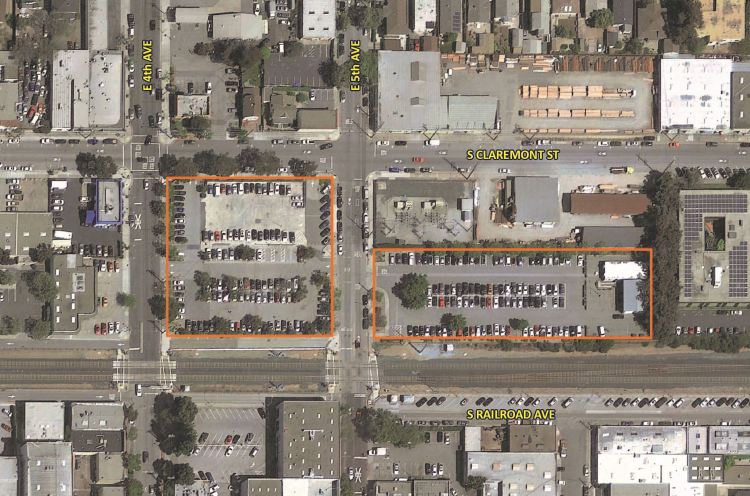
Background: The City owns two properties in Downtown San Mateo, 480 E. 4th Avenue and 400 E. 5th Avenue, which were originally purchased by the City of San Mateo Redevelopment Agency. The sites are currently surface public parking lots and jointly contain 235 parking spaces. The 400 E. 5th Avenue site also houses the Worker Resource Center. As part of the redevelopment dissolution process, the State approved the transfer of the sites to the City in March 2015 with the requirement that the City use these sites for development. As a result, the City is required to seek development proposals for the sites and to enter into a compensation agreement with the other taxing entities in San Mateo County to distribute the proceeds from the disposition of the sites (be it land sale proceeds or ground lease revenues). (Reference: Downtown Opportunity Site RFP)

Community Input Requested: On Monday, April 16th, the San Mateo City Council will decide between two developers that were selected by Staff: MidPen Housing and Raintree Investments. Please review the Administrative Report with Staff Recommendation and related RFP and materials. Contact the City Council to share your input by Monday, April 16th!

Document

Talk Traffic & Trash @ HANCSM Spring Meeting

Come meet your neighbors and enjoy some light refreshments (también hablamos Español) – all are welcome to join our HANCSM Spring Meeting!

Thursday, April 26, 2018
6:30 pm to 8:30 pm
Martin Luther King, Jr. Center
725 Monte Diablo Avenue

Topics include:

  • Crime & Safety Report, Police Department
  • Neighborhood Traffic Action Plan, Public Works
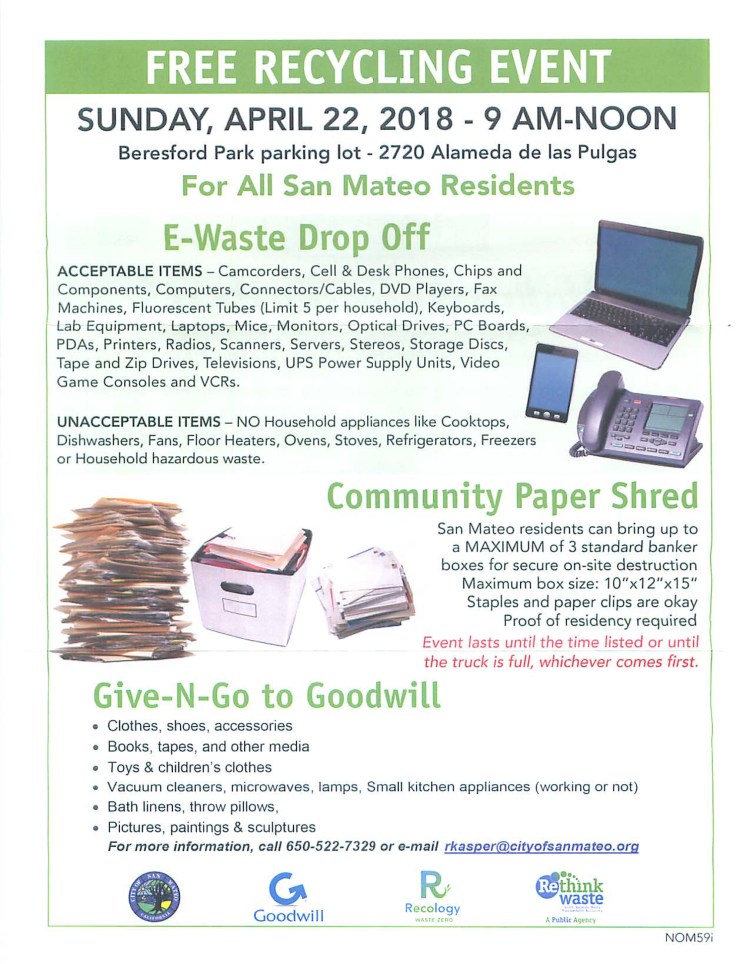
  • Let’s end littering and dumping in North Central!

Love North Central Event Logo

Neighborhood Clean Up Day 
Saturday, June 9, 2018
Meet at 9am @ Martin Luther King Jr Center
725 Monte Diablo St., San Mateo
Pre-register Online

Organization Highlight: North Central Neighborhood Association

The North Central Neighborhood Association (NCNA) is perhaps the most significant community institution in North Central. Its volunteer leaders have been quietly and steadily uplifting our community spirit for nearly forty years. The association’s legacy is immeasurable, as multiple organizations have grown out of their efforts and continue to serve our community decades later.  

542746802.540152
Rev. Morris Coleman, Sr. (founding NCNA member) & Gloria Brown (Black Women United member) 1984

In 1983, NCNA organized the first Martin Luther King, Jr. Essay and Poetry Contest with the help of the local N.A.A.C.P Chapter. The contest invited all church members and district students from kindergarten to 12th grade to present an original poem or essay to reflecting on Dr. King. This was an important and timely effort to celebrate Dr. King when the country was still debating the idea of creating a national holiday. On November 2, 1983 President Reagan signed the bill creating a federal holiday to honor Dr. King. Just a few months later, Mayor Florence P. Rhoads of the City of San Mateo designated January 8-15th, 1984 Dr. King Week. In 1986, NCNA partnered with Black Women United, a local group of professional women, many of who were teachers and educators. With funding support from NCNA, BWU directly managed the event until 1997. NCNA has been managing the contest ever since, and January 2018 the Martin Luther King, Jr. Essay, Poetry, and Art Contest marked it’s 35th year!

Screen Shot 2018-01-07 at 2.11.27 PM


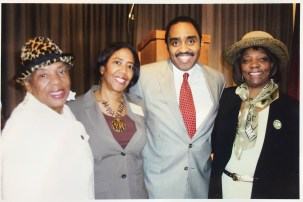
Eleanor Curry, Anita Webb, Emmett D. Carson (Silicon Valley Community Foundation), Ethel Burnside (2008)
Eleanor Curry, Anita Webb, Emmett Carson (Silicon Valley Community Foundation), Ethel Burnside (2008)

In 1984, NCNA began a free after-school tutoring program at the King Center run by volunteers. The Peninsula Community Foundation (now the Silicon Valley Community Foundation) provided grants and even funded the first computer for the tutoring program. The program was in high demand and quickly expanded through the efforts of Ethel Batiste and Mildred Swan, who liaised with the school district and recruited volunteer tutors. Ultimately NCNA transferred the program to C.L.E.O. in the early 1990s. When C.L.E.O shut its doors, Homework Central was established and still operates a nonprofit after-school tutoring and family support program serving socio-economically disadvantaged students in North Central.


Jean Norwood Ethel Batiste (2008)
Jean Norwood (visionary of the NCNA baccalaureate program) & Ethel Batiste (co-founder of the NCNA tutoring program) 2008

In 1985, the NCNA president Jean Norwood and founding member Dorothy Wesson spearheaded the first NCNA baccalaureate scholarship program – a college scholarship and student achievement award ceremony to celebrate graduating black high school students in San Mateo. At the time, a black student had yet to receive academic recognition or a scholarship from the existing school and community programs. Roger Winston, who served as the Human Relations Director for San Mateo High School District, recognized the need to increase engagement among black parents. He hosted meetings in his home to educate parents on ways to support their students. These efforts grew to form the Black Parents Association (BPA) of the San Mateo Union High School District, which was founded by Robert Printis. In 1987, NCNA transferred the baccalaureate program to BPA, which has carried forth this legacy for over thirty years. Today BPA is a thriving organization which hosts member meetings with artist and activist speakers, organizes college tours, and continues the baccalaureate scholarship and award ceremonies at the Trinity Baptist Church in San Mateo.

Circa 1987, Bertha Sanchez, a NCNA member, joined other North Central neighbors, including Maxine Turner and Dorothy Chow to protest and ultimately stop a major housing development project on Humboldt Avenue. Catalyzed by the community energy, they formed the Homeowners Association of North Central San Mateo (HANCSM). In the 1990s, the organization was renamed the Home Association of North Central San Mateo, to make the association more inclusive and welcoming to renters and local businesses. HANCSM continues to focus on community development, housing, zoning and neighborhood beautification efforts. Sanchez stayed active with NCNA and served as the HANCSM president for over 20 years until her death in 2016.

As North Central residents, we are still sowing the seeds that were planted by the dedicated members of NCNA.  To learn more about ways you can support the North Central Neighborhood Association contact: ncnamlk@yahoo.com and please make a tax deductible donation through PayPal. 

Sources and photo credits: Anita Webb, NCNA Financial Secretary

_____
North Central is one of the oldest neighborhoods in the City of San Mateo and home to many trailblazers. As North Central residents we are all custodians of this rich and diverse history. HANCSM is proud to share stories of our neighborhood history and the leaders who helped shaped the community that we enjoy today. Poet Robert Penn Warren said, “History cannot give us a program for the future, but it can give us a fuller understanding of ourselves, and of our common humanity, so that we can better face the future.” 

5 tips for disaster prep

Here are a few quick and easy tips for disaster preparedness that could save a life.

1. Schedule PG&E Free Safety Check
They will come inspect gas appliances, help you locate your shut-offs. and they can find your underground service lines: 800-473-5000
2. Get a Fire Extinguisher & Smoke Detector
Keep your extinguisher near an exit and install a 10-year battery smoke detector. Always call 9-1-1 for help.  Seeing is believing – watch how quickly fires spread: https://tinyurl.com/y98x4shl.
3. Remove Fire Hazards
FREE toxic drop off at SMC Health (32 Tower Rd) dump your old paint and cleaners, aerosol spray cans, chemicals. Schedule online: www.smchealth.org/hhw
4. Make a Plan
In a major disaster you might only be able to make and receive calls from out of the area. Designate a contact person out of the region who can field calls and pass on messages. As a family, choose a meeting place on your block and in a nearby an open space.
5. Keep a “Go Bag”  under your bed 
Pack closed-toes shoes, battery-powered flashlight, extra batteries, pry-bar, copies of essential documents, snacks, water, and cash in small bills. 
Screen Shot 2018-03-12 at 3.43.07 PM
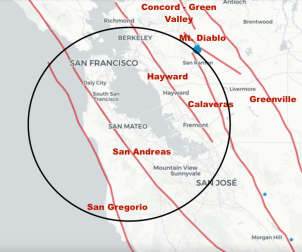
San Mateo is near four major earthquake fault lines: San Andreas, San Gregorio, Hayward, and Calaveras

RESOURCES: 

hsd.smcsheriff.com/smcalert – SMC notification system to alert you during urgent or emergency situations.

myhazards.caloes.ca.gov – MyHazards is a tool to discover hazards in their area and learn steps to reduce personal risk.

SanMateoCERT.org – Community Emergency Response Team 25-hr training and Get Ready 2-hr workshops.

Car-Light Housing: More Affordability, Less Traffic Discussion

We need to address the housing affordability crisis, but we don’t want to make it harder to get around town or harm the climate. Join Friends of Caltrain for this discussion to:

friends of caltrain logo

  • Learn about the connections between housing affordability, traffic reduction, and climate change.
  • Hear what neighboring communities are doing to reduce the need to drive.
  • See how you can help make your community more walkable, affordable, and transit-friendly.

Speakers:

  • Nina Rizzo manages GreenTRIP Certifications at TransForm. The GreenTRIP program supports multi-family residential developments that implement strategies to reduce traffic, parking and greenhouse gas emissions
  • Nevada Merriman of MidPen Housing is designing and developing affordable housing where residents can reduce their reliance on cars
  • Elaine Breeze of SummerHill Apartments works on “smart growth” multi-family rental housing and mixed use developments

Co-sponsors:

TransForm, Housing Leadership Council, Home for All, Silicon Valley Climate Action Alliance, OneSanMateo, Imagine San Mateo, Friends of Caltrain

When: Monday, March 26th from 6:30-8pm
Where: San Mateo Downtown Library
Address: 55 W 3rd Ave, San Mateo
Visit Link to RSVP

What is the fuss about Measure P?

Today The Daily Journal published two opposing views on Measure P.

Housing-red

On December 15th, 2004 San Mateo City voters approved Measure P (17,151 / 68.7% Yes votes and 7,826 / 31.3% No votes) below is summary of the impartial analysis of measure that was published on SmartVoter.org.

Measure P extended the allowable height and density standards for new developments in the City of San Mateo that were established by Measure H in 1991. Measure P expires in 2020.

Background on Measure H: In 1991, San Mateo voters enacted Measure H, an initiative amending the City’s general plan. Measure H changed standards concerning allowable height and density for development and added requirements for affordable housing in new residential projects.

  • Measure H reduced allowable heights for commercial and multi-family residential structures. Before Measure H, buildings as high as 120 feet were allowed. Measure H established a 55 foot height limit for most areas zoned for commercial and multi-family projects. Measure H allows buildings up to 75 feet in certain areas with the provision of special “public benefits.”
  • Measure H reduced allowable building density. The prior general plan allowed for floor area ratios in the Downtown up to 8.0 and for multi-family densities up to 124 units per acre. Measure H reduced maximum Downtown ratio to 3.0 and reduced maximum multi-family density to 50 units per acre. Measure H allows for densities up to 75 units per acre in limited acres with special public benefits.
  • Measure H required residential projects with more than 10 units to restrict 10% of the units for affordable housing.

Summary of Measure P:

  • Measure P clarified issues that have arisen in implementing Measure H. After Measure H was adopted, the question arose as to whether the height map described in the measure would prevent the City Council from changing a property’s planned land use to a land use that would allow a range of heights greater than those designated on the map. The City’s past practice has been to allow such changes. Measure P would sanction this past practice if certain findings supporting the reclassification are made. Another clarification authorized the City Council to establish an inclusionary requirement higher than the current 10%, and to authorize the Council to establish a requirement that developers pay a fee in lieu of units for fractional affordable unit requirements.
  • Measure P made limited modifications to the policies established in Measure H. For example, Measure H limited remodels at the Hillsdale Shopping Center to 55 feet, even though some existing buildings are 60 feet high. Measure P authorized building heights up to 60 feet at the center. Measure P also authorized the City Council to establish new land use classifications in the general plan but limited the building heights in such areas to no more than 55 feet.

(Full text is available: Impartial Analysis from Shawn M. Mason, City Attorney – City of San Mateo: